


Ever faced unpredictable weather and wished your backpack contents would stay dry? Especially during outdoor adventures, having a waterproof backpack is crucial.
Waterproofing tests for outdoor backpacks include rain simulation, submersion tests, and permeability checks. These ensure the backpack stays dry under real conditions, offering peace of mind to adventurers.
When facing harsh weather or off-road adventures, having a backpack that protects gear from water is vital. Let’s dive into how these tests are conducted.
What Is the Rain Simulation Test?
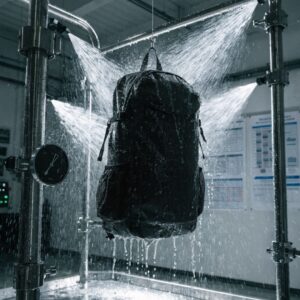
Wonder if your backpack can withstand heavy rain?
The rain simulation test involves simulating rain over the backpack, checking for any liquid penetration to ensure it can handle heavy or even stormy rain.
The rain simulation test uses specialized equipment to mimic a rainy environment, positioning the backpack at various angles to test its resistance. This test runs for a specific duration to ensure the backpack’s waterproof performance in prolonged rain. Moreover, the test examines details like zippers and seam waterproofing, as these areas often are leakage weak points. After testing, the interior is checked for dryness to assess waterproof effectiveness. This method helps to better evaluate the product’s quality and reliability.
How Is the Submersion Test Conducted?
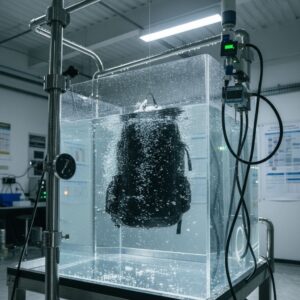
Worried about puddles or rivers affecting your backpack contents? The submersion test can reveal such impacts.
The submersion test checks a backpack’s waterproofing by fully immersing it for a short period, ensuring water doesn’t seep into the inner layers.
In the submersion test, the backpack is fully submerged in water for a certain time, usually using a clear tank to watch for quick water penetration. The test uses absorbent paper or pre-weighed items inside to detect moisture absorption. It repeats at different depths and durations to identify potential leak points, crucial when facing water challenges like diving or river crossings. Backpack material, design, and stitching workmanship jointly determine its waterproof efficacy. Ensuring the backpack excels in this rigorous test is key for adventurers facing water challenges.
Why Is the Permeability Check Important?

Think a breathable backpack is enough? For some environments, it might not be.
The permeability check assesses how backpack materials handle water pressure, ensuring the interior remains dry.
The permeability check targets the integrity and reliability of backpack materials. This involves pressure water jets sprayed at different intensities on the backpack surface, monitoring material strain and water penetration speed. The check also covers key areas such as the bottom, seams, and zippers, the most vulnerable spots. During this process, areas showing signs of water penetration need extra attention, and the final test results help in designing improvements or selecting appropriate materials to ensure that in unexpected environments, the backpack offers long-term protection to the user.
Conclusion
Through rigorous waterproof testing, ensuring that outdoor backpacks keep items dry across various environments is key to stress-free travel.
